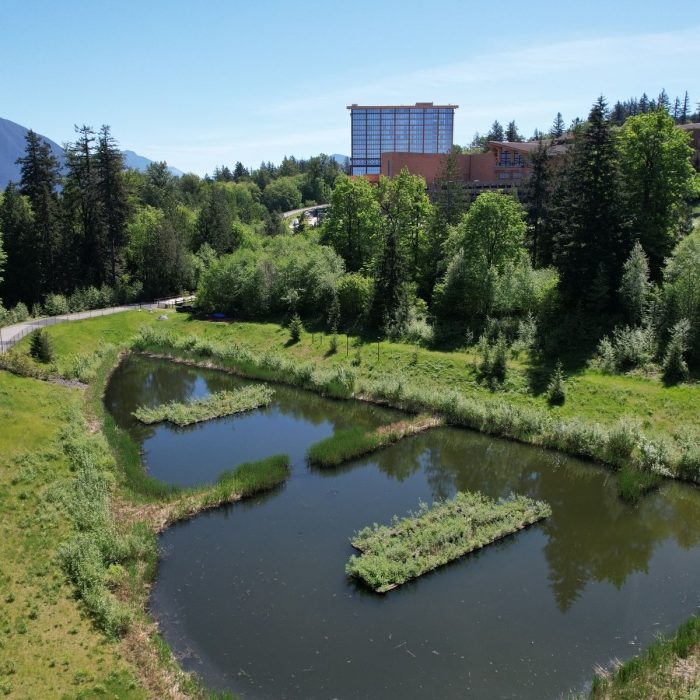
A floating wetland installed by the Snoqualmie Tribe is showing how native plants can support both water quality and wildlife habitat in a developed area of the Snoqualmie Reservation.
The Tribe installed the floating treatment wetland in 2023 in a stormwater pond near the Snoqualmie Casino & Hotel. The pond collects runoff from surrounding development, and the Tribe’s Environmental & Natural Resources Department (ENR) is studying whether the wetland can help improve water quality.
Floating treatment wetlands consist of plants growing on mats at the water’s surface. Their roots extend into the water, where they can absorb excess nutrients and help filter contaminants. Above the surface, the vegetation provides shade which is an important benefit in places where planting large trees around stormwater infrastructure may not be practical.
The project uses native Pacific Northwest plants selected for their ability to thrive in wetland conditions, provide shade, support native pollinators, and offer cultural value.
As those plants have grown, the wetland has also become a small but active piece of habitat. This year, Canada geese raised five goslings from a nest on the wetland, while red-winged blackbirds have been observed using its willows and twinberry. Waterfowl, songbirds, snakes, bees, and other pollinators have also visited the structure.
ENR continues to monitor the project using temperature loggers, water sampling, and wildlife observations. Because floating wetlands can become more effective as plants mature, roots expand, and microorganisms become established, monitoring over time will help the Tribe understand the full benefits of the project.
The results could help inform whether floating treatment wetlands offer another tool for supporting water quality and habitat in developed areas of the Snoqualmie Reservation.